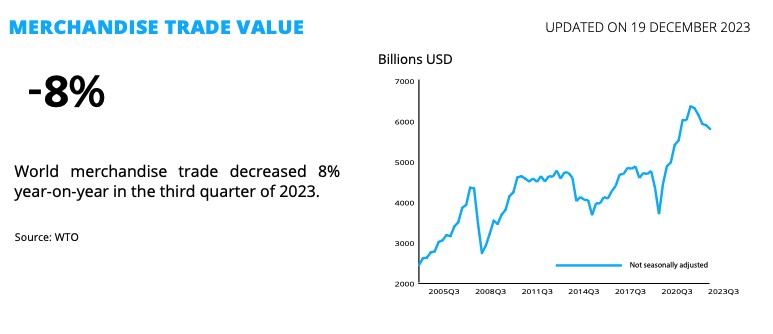
China released eye-popping June trade numbers on Tuesday. “A bit insane,” said Brad Setser of the Council of Foreign Relations, on X. Overall, Chinese exports increased 27% year-on-year to $412.4 billion. Imports expanded even more, by 36% year-on-year, to $286.8 billion.
Chinese officials attributed the spike to the new artificial intelligence economy. “With the rapid growth of AI, our imports and export of products in this field are robust,” Wang Jun, a vice minister for customs, told reporters.
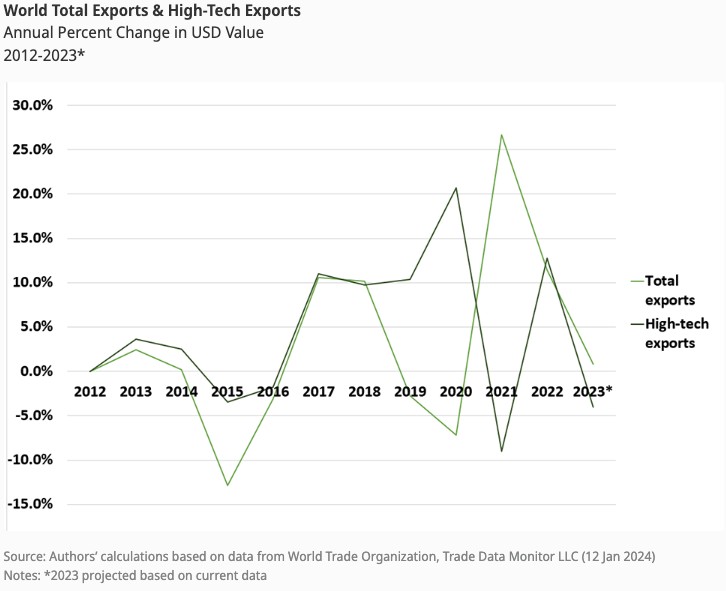
The trade statistics back up these claims. Exports of high-tech products increased 52.4% to $118.8 billion.
Analysts agreed. “Trade values took another big leg up in June,” Capital Economics said in a note. “This predominantly reflects the recent surge in semiconductor prices on the back of the AI boom. But even putting that aside, foreign demand for Chinese goods remains robust.”
Part of the surprise is that China’s wider economy isn’t booming like it was earlier this century. Economists expect Chinese GDP to increase 4.5% in the second quarter, down from 5% in the first. The U.S.-Iran war, which has closed the Strait of Hormuz, an essential oil corridor for China, is another factor of uncertainty.
So AI is the magic bullet (for now) but it was another high-tech product that set a record Tuesday: cars.
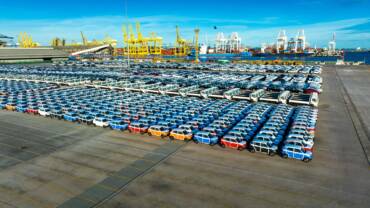
China exported 1.069 million cars, up 72.7% from the same month in 2025. That’s the first time it’s recorded a seven-figure tally in a single month. For the 12 months of 2025, China exported 8.4 million vehicles, up from 1.7 million in 2020, and 795,615 in 2010.
Chinese officials were quick to point out China’s strength in the electric vehicle market. Wang, the customs official, noted that the world’s “low-carbon transition” had led to an increase in EV consumption and imports from China.
And it is increasing, although in 2025, EVs accounted for just 2.2 million, or 26.3%, of China’s total car exports.
China now has the world’s most enviable auto industry. In total, it exported $110.4 billion of cars in 2025, second only to Germany at $176.8 billion. That’s a more than ten-fold increase from 2020, when it exported $9.9 billion, ranking 16th in the world, behind France, Sweden, and Slovakia.
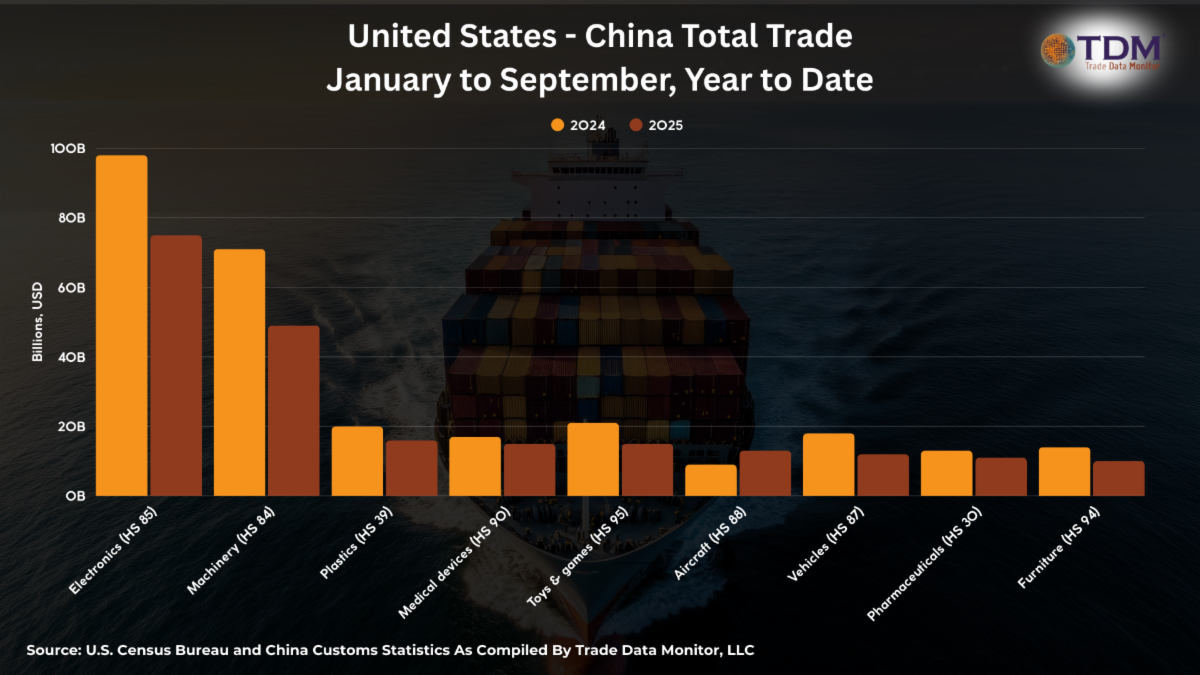
It’s the tech edge that explains how China’s exports to the U.S. increased 13.9% in June to $43.5 billion. The consumer manufacturing economy, as we’ve been saying for a few years, is not what it once was. Shipments of footwear slipped 1.1% in June to $4.1 billion. Sales of toys dropped 6.4% to $3.4 billion.
Sales to the rest of the world increased more. Exports to ASEAN countries rose 34.6% to $78.3 billion, and shipments to the EU rose 18.6% to $58.3 billion. Exports to Africa increased 28.1% to $25.1 billion.
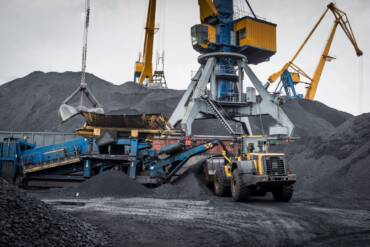
On the import side, China’s demands were driven by its high-tech needs and by consumption of commodities like U.S. and Brazilian soybeans, oil and gas from the Middle East, and copper and iron ore from Australia and Latin America.
Shipments from the EU rose 9.2% $25.4 billion. Imports from the U.S. increased 25.8% to $14.6 billion. Purchases from ASEAN nations rose 26.3% to $41.2 billion.
Commodity purchases are why imports from Africa increased 39.9% to $14.4 billion, and imports from Latin America expanded 36.5% to $27.4 billion. A big part of that was shipments from Brazil, which increased 32.5% to $14.4 billion.
The U.S.-Iran war, and the Strait of Hormuz closure, has caused China to change its energy consumption strategy.
China cut imports of crude petroleum in June 41.3% to 29.3 million tons but increased natural gas imports 108.6% to 10.9 million tons.
By comparison, imports of high-tech products increased 57.8% to $106.7 billon.
China has been reducing its reliance on fossil fuels this year. For the first four months of 2026, according to TDM data, China imported $990.3 billion, of which $146.2 billion, or 14.8%, were fossil fuels.
In 2025, China imported $2.6 trillion, and the percentage of fossil fuels was 17.1%. (By comparison, the EU’s percentage of fossil fuel imports was 16.4% of its $2.8 trillion in imports in 2025.)
In 1995, the first year for which TDM has Chinese historical data, China imported $132.1 billion. Only $5 billion, or 4%, was fossil fuels.






 5. Russia’s Shrinking Import DemandRussia still isn’t publishing trade statistics, but thanks to the breadth of TDM’s database, we can look at which countries are shipping to Russia. Those exports to Russia are mostly shrinking, an indication of the battering Russia has been taking from the war. The IMF and other institutions predict Russian GDP growth of only around 1% in 2026.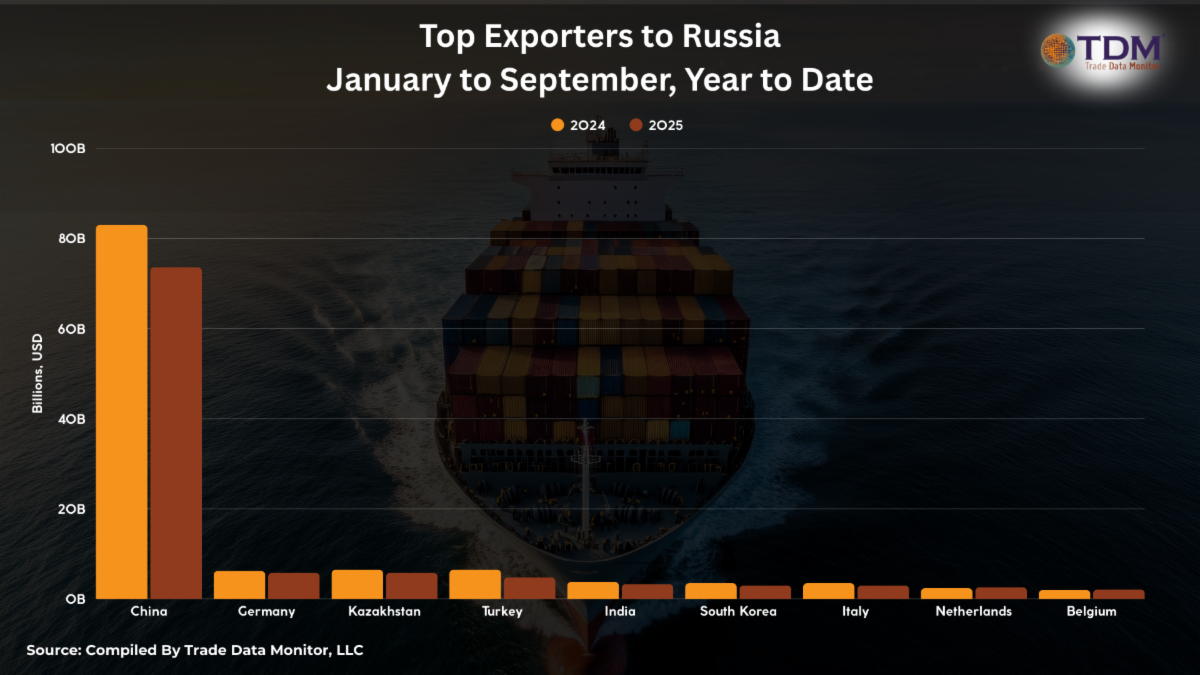
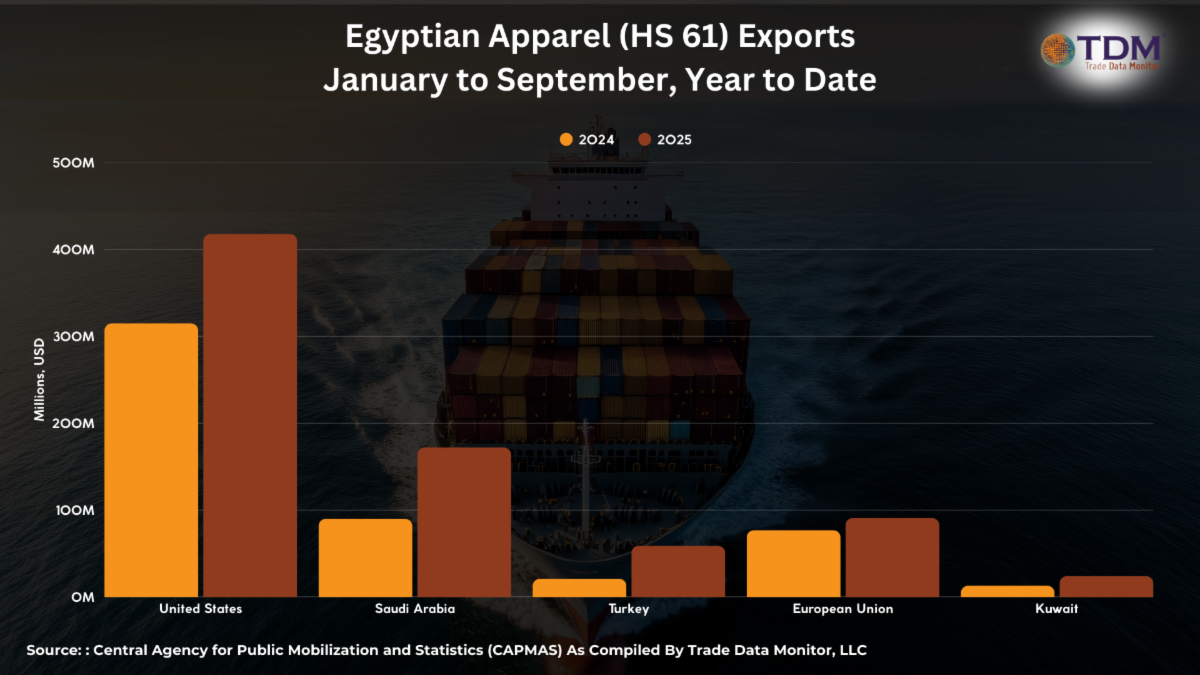
 8. Trade Case Study: EgyptTrade coverage focuses on the big countries, but we’ve been studying smaller players, and one interesting case study is Egypt. It’s been boosting apparel exports, a sign of a country’s increasing prosperity and competitiveness on export markets. In 2025, Egypt clocked the biggest increase in apparel exports, shipping out $2.6 billion in the first nine months of 2025, 30.7% more than the year before. The second highest increase was registered by Cambodia at 16.9%, and no other country improved by double digits.
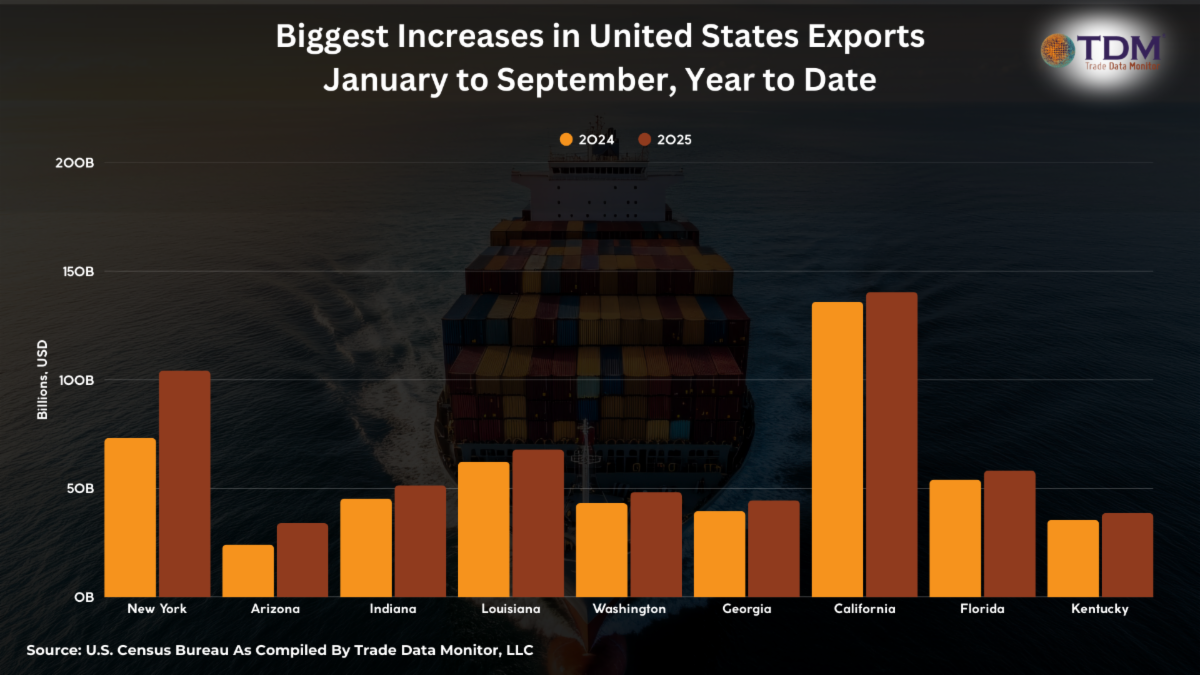
  9. What States’ Ports and Economies Are Thriving MostAmerica is a huge continental economy with dozens of distinct economic regions and sea- and airports. We sorted every state by increase year-on-year in exports from the place it’s leaving the U.S., over the first nine months of 2025. Texas and California are still the biggest exporters overall, but New York leads the race in year-on, because of its trade in physical gold. Arizona ranks second because of its electronics trade with Mexico. Third is Indiana, thanks to its exports of hormones to Italy.
  10. U.S. Wine ExportsA retaliatory tariff and a “Buy Canadian” movement have dented U.S. wine exports to its northern neighbor. Instead, U.S. producers are finding replacement markets in Germany, South Africa and Japan.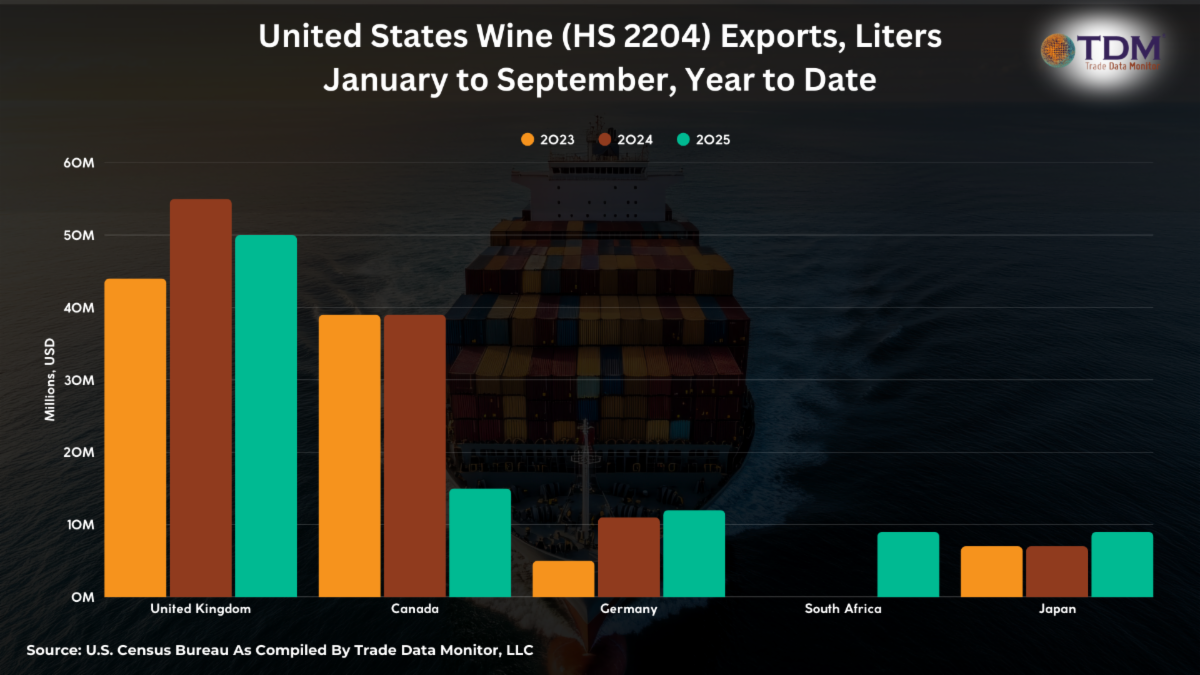
 With tariffs still beating down optimism over global trade, it’s easy to get dragged down by the political story of modern commerce. What’s lost is the triumph of human ingenuity represented by the global logistics industry figuring out how to move goods from any place in the world to any other place. My former Wall Street Journalcolleague Christopher Mims tells that story in his 2021 book