U.S.-China Summit This Week
When Presidents Donald Trump and Xi Jinping meet in Beijing, trade, for once, won’t be the primary topic. Among more severe crises in play are the U.S. war with Iran, the rise of artificial intelligence, and China’s desire to annex Taiwan. After the Trump’s imposition of triple-digit tariffs last year, Beijing and Washington agreed to a one-year trade truce in October that imposes tariffs averaging 47% on Chinese exports to the U.S. and around 30% on goods going the other way.
China Boosts Exports
This weekend, China said its exports to the rest of the world had increased 14.1% year-on-year to $359.4 billion. That was a surprisingly strong performance for a Chinese export economy that’s struggled to find its footing this decade. In March, exports increased only 2.5%, and a group of economists recently interviewed by the Wall Street Journal summoned an estimated expansion for April of only 8%. China’s manufacturers had suffered more than most from the conflict in the Middle East and the difficulty navigating the Strait of Hormuz.
Trade to the U.S. Recovers
Exports to the U.S. rose 11.4% to $36.8 billion. In the first quarter of 2026, by contrast, shipments to the U.S. dropped 16.3% to $96.7 billion. What’s going on here? In part, it signals a stabilization after the hard dip caused by tariffs a year ago. April 2025 is when Chinese exports to the U.S. really got hit: That month Chinese exports to the U.S. dropped 21.1% to $33 billion. By comparison in March 2025, they increased 8.7% to $40 billion. With a lower baseline, expect Chinese exports to the U.S. to stay flat on increased slightly year-on-year. To be sure, last year, despite the slowdown in trade with the U.S., China set a record with a $1.2 trillion trade surplus.
But the April numbers suggest that the U.S. could be losing leverage. Before Trump, the U.S. had imposed some of the lowest tariffs in global economic history, the result of its postwar liberalization philosophy. The U.S. under Trump has used the negotiating power offered by those low tariffs to exact concessions from enemies and friends. Now, however, “China looks to have more leverage,” Capital Economics wrote in a report. “Higher tariffs haven’t stopped China’s exports from continuing to surge over the past year, and Beijing has showed that it is prepared to wait out U.S. pressure.”
Semiconductors and Cars
The rest of China’s trading partners gobbled up cars, semiconductors, and other high-tech goods the country is currently manufacturing. Shipments to the European Union increased 13.6% to $53 billion, and sales to ASEAN nations rose 15.4% to $69.5 billion. Exports to Brazil increased 37.1% to $7.8 billion.
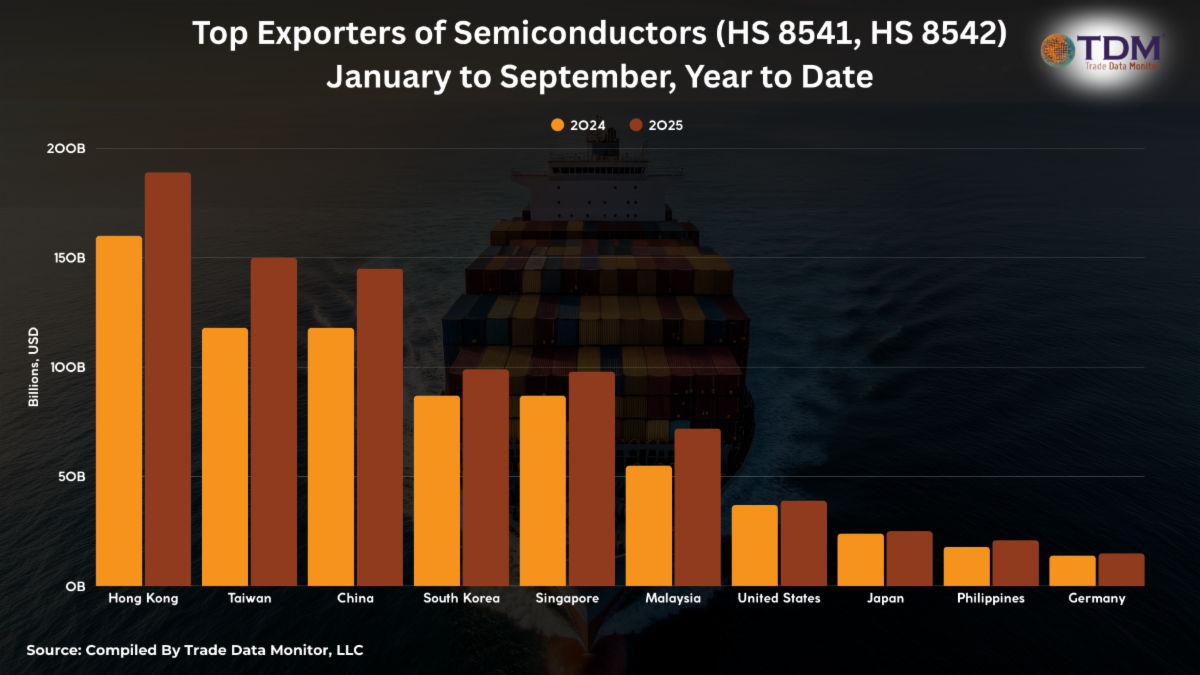
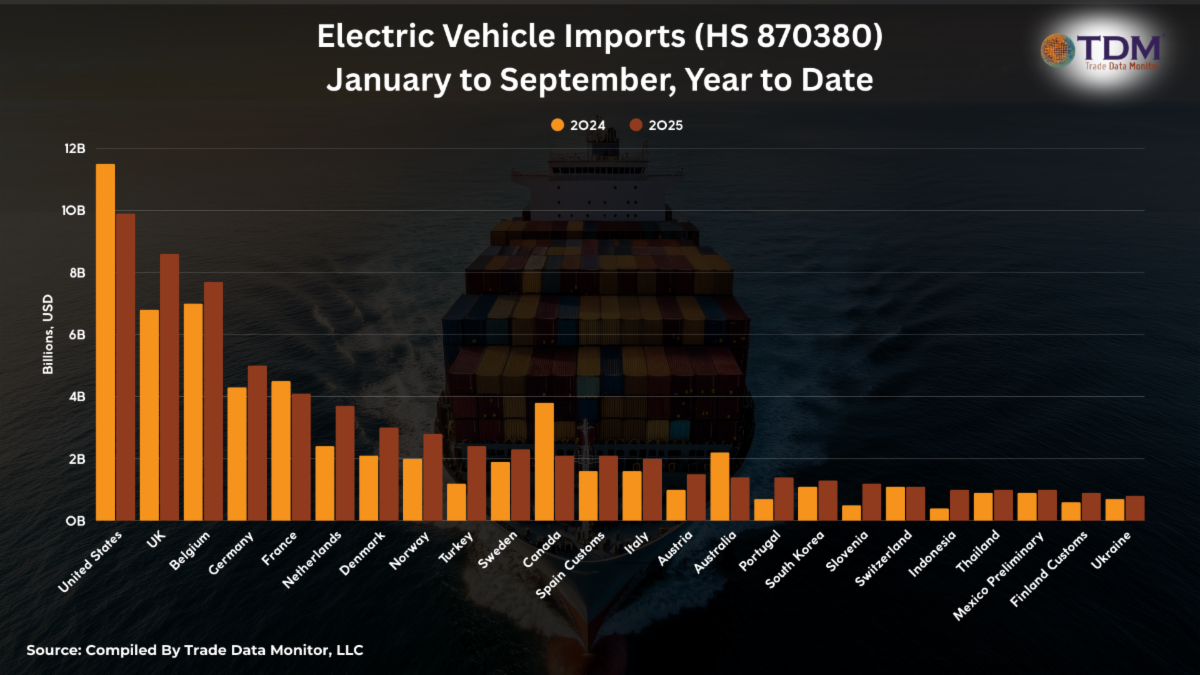
Exports of “automatic data processing machines and parts thereof” increased 47.7% to $23.8 billion. Shipments of high-tech products spiked 39.3% to $104 billion. Exports of motor vehicles increased 44% to $16.1 billion. By contrast, sales of ag products increased 3.8% to $8.8 billion.
China’s Buying
China’s economy imported $274.6 worth of goods in April, up 25.3% year-on-year, after rising 27.8% in March. The Wall Street Journal economists had predicted a rise of 16%.
China is importing components for its booming tech industry. Imports of high-tech products rose 42.1% to $95.9 billion. Imports from the EU increased 14.6% to $23 billon, purchases from the U.S. increased 9.4% to $13.7 billion, and shipments from ASEAN countries rose 29.1% to $42.7 billion. Imports from India rose 32.3% to $2.3 billion. But there are signs that the Strait of Hormuz closure is having an impact. Imports of crude petroleum, most of it from the Middle East, dropped 19.9% to 38.5 million tons. Imports of natural gas, from countries like Russia, increased 83.1% to 8.4 million tons.
As always, when he arrives in Beijing, President Trump will ask China to buy more American goods. With duties already on the board, and courts in the U.S. now limiting his tariff power, the trade war, if not over, has become much harder for the U.S. to fight.



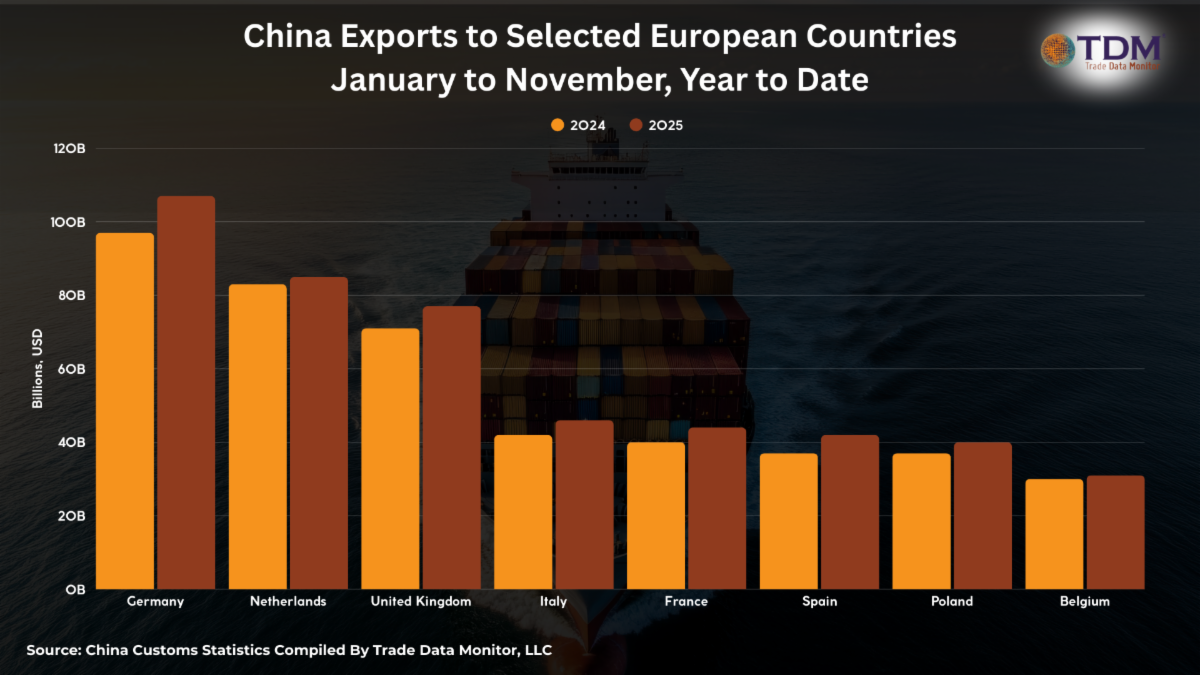
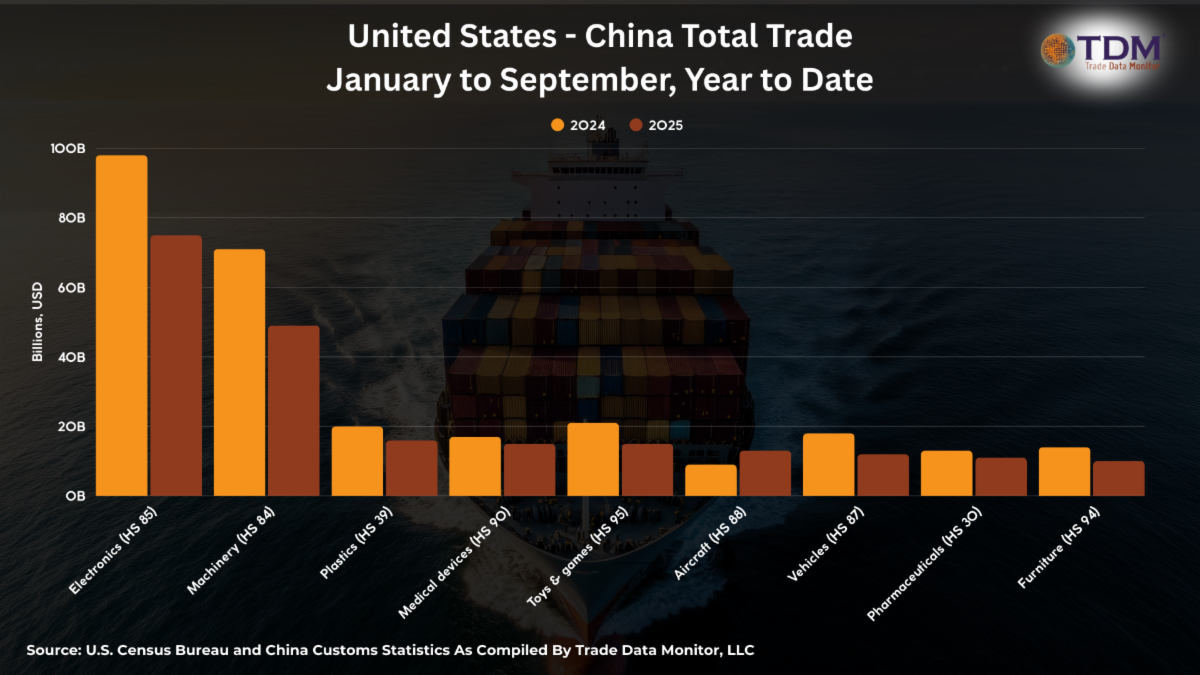
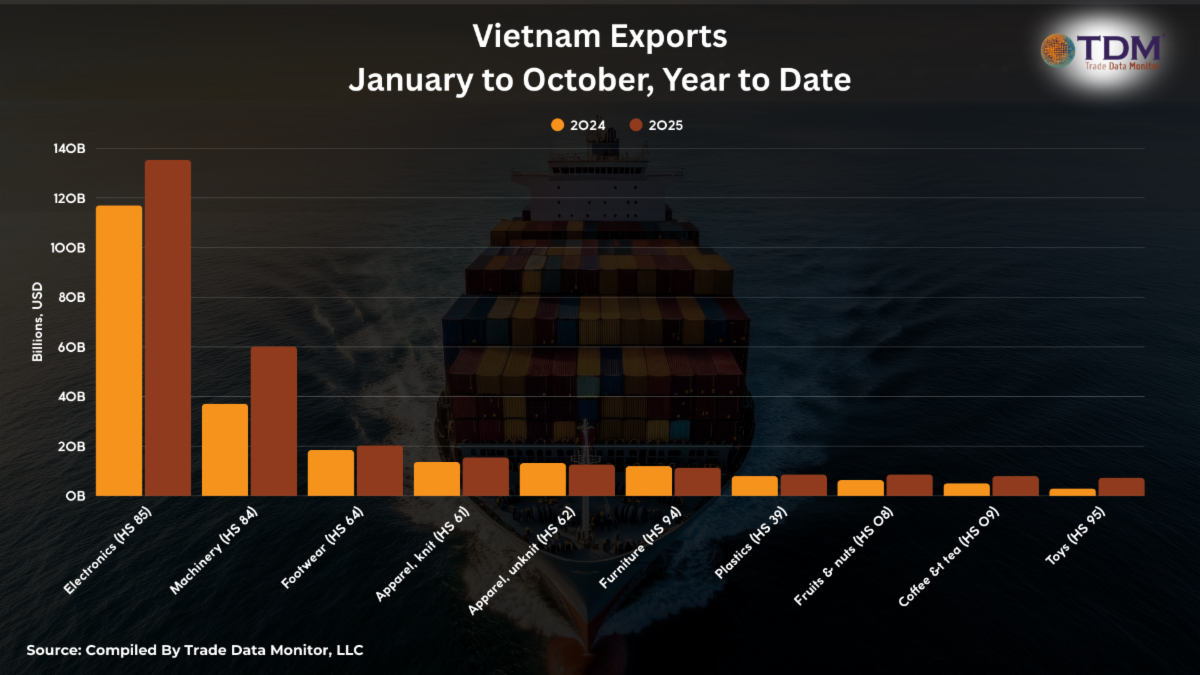 5. Russia’s Shrinking Import DemandRussia still isn’t publishing trade statistics, but thanks to the breadth of TDM’s database, we can look at which countries are shipping to Russia. Those exports to Russia are mostly shrinking, an indication of the battering Russia has been taking from the war. The IMF and other institutions predict Russian GDP growth of only around 1% in 2026.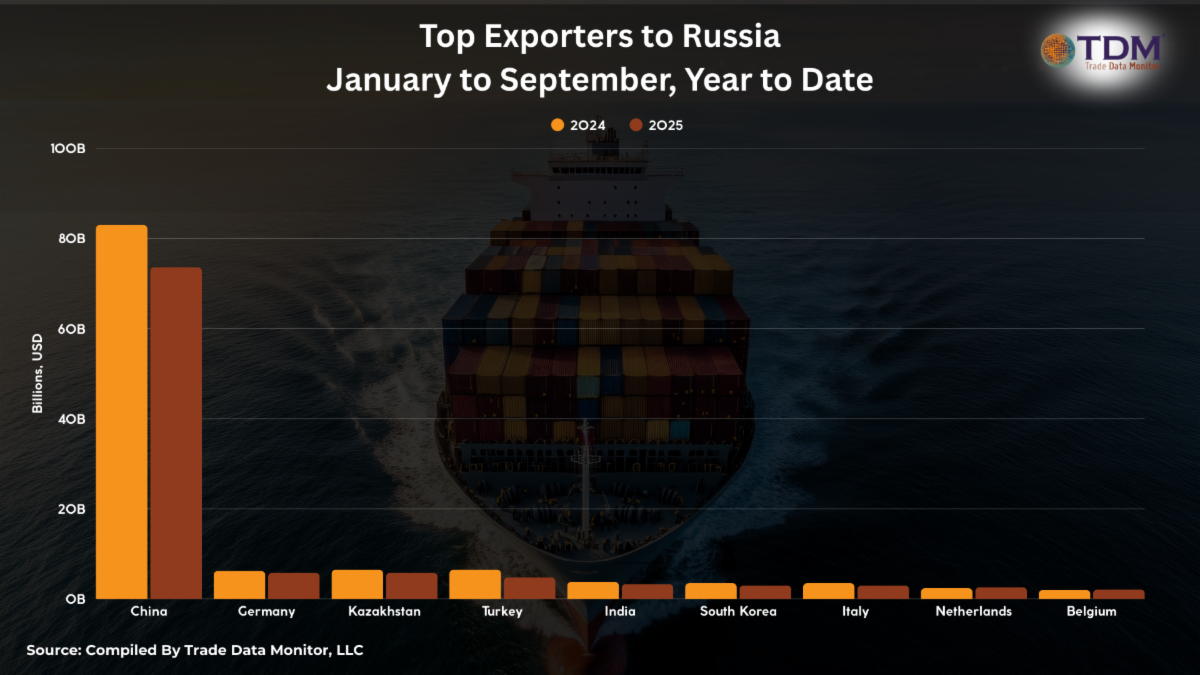
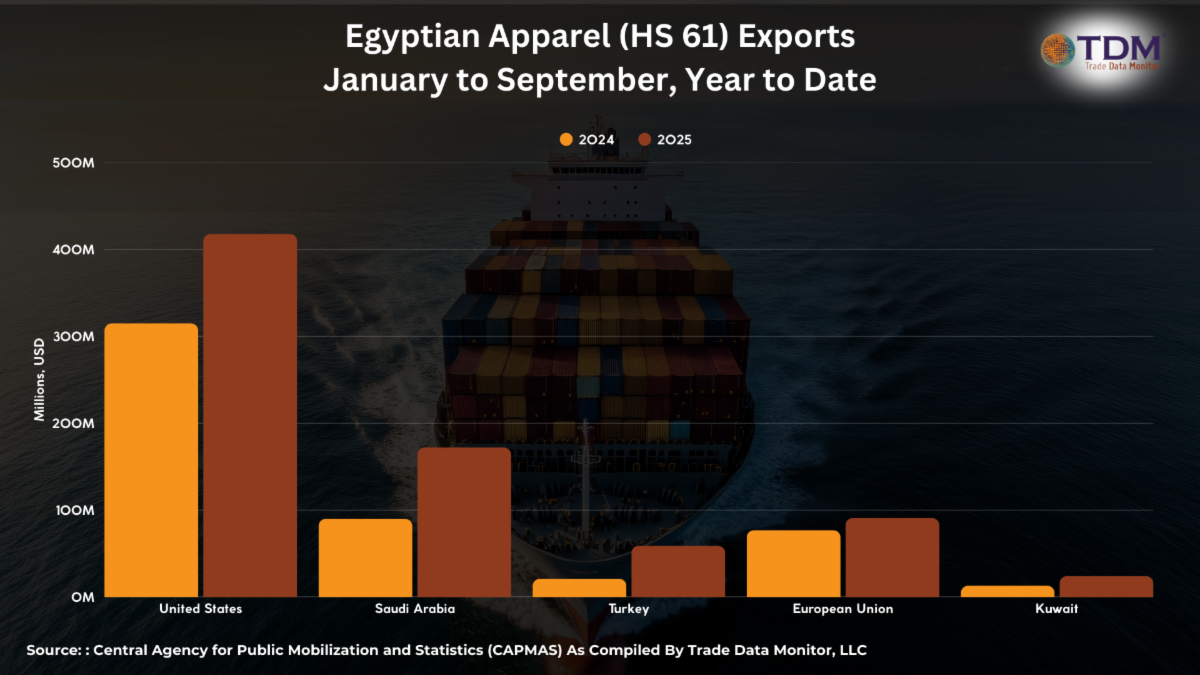
 8. Trade Case Study: EgyptTrade coverage focuses on the big countries, but we’ve been studying smaller players, and one interesting case study is Egypt. It’s been boosting apparel exports, a sign of a country’s increasing prosperity and competitiveness on export markets. In 2025, Egypt clocked the biggest increase in apparel exports, shipping out $2.6 billion in the first nine months of 2025, 30.7% more than the year before. The second highest increase was registered by Cambodia at 16.9%, and no other country improved by double digits.
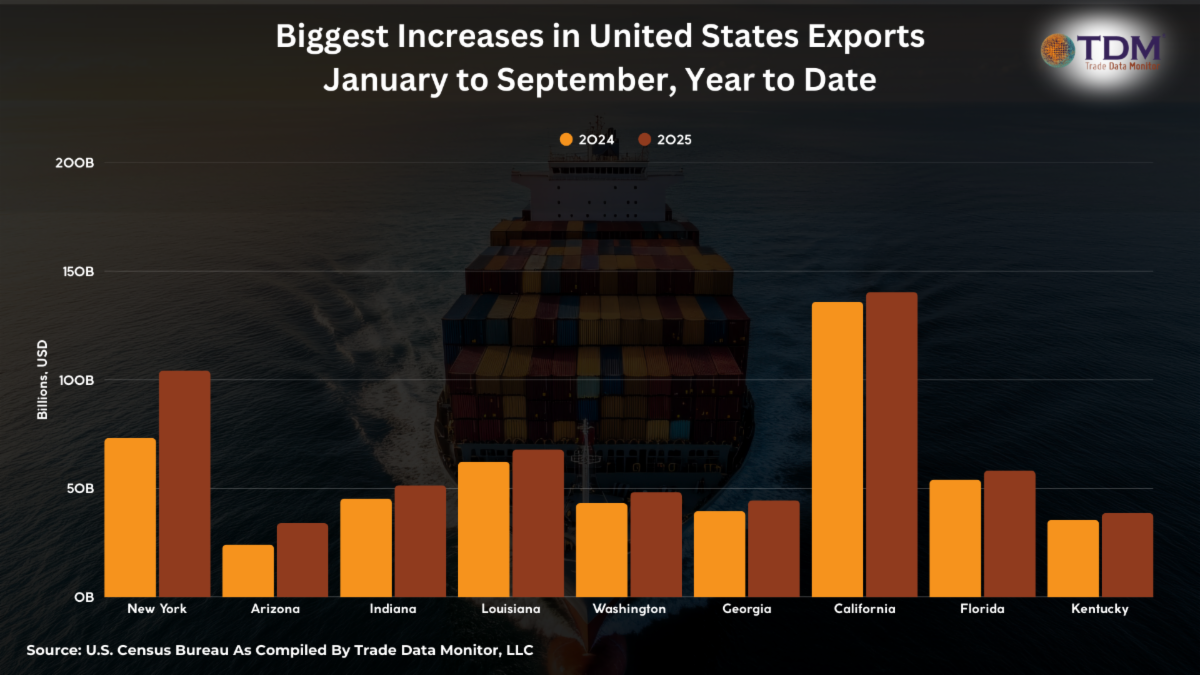
  9. What States’ Ports and Economies Are Thriving MostAmerica is a huge continental economy with dozens of distinct economic regions and sea- and airports. We sorted every state by increase year-on-year in exports from the place it’s leaving the U.S., over the first nine months of 2025. Texas and California are still the biggest exporters overall, but New York leads the race in year-on, because of its trade in physical gold. Arizona ranks second because of its electronics trade with Mexico. Third is Indiana, thanks to its exports of hormones to Italy.
  10. U.S. Wine ExportsA retaliatory tariff and a “Buy Canadian” movement have dented U.S. wine exports to its northern neighbor. Instead, U.S. producers are finding replacement markets in Germany, South Africa and Japan.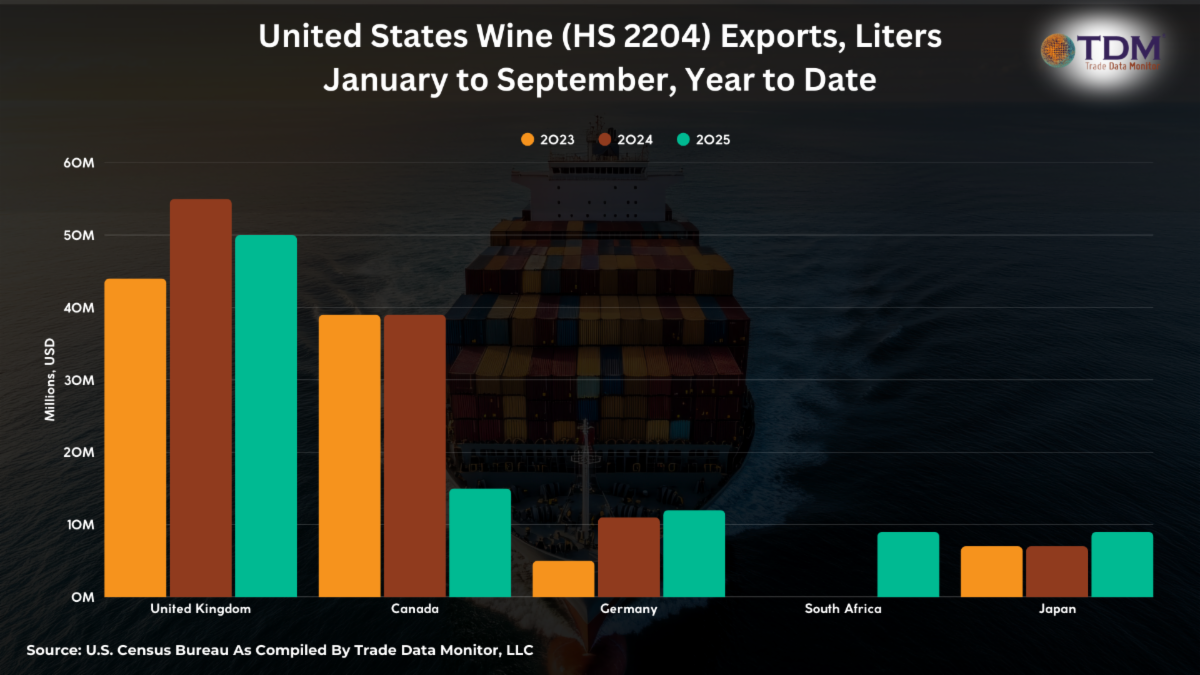
 With tariffs still beating down optimism over global trade, it’s easy to get dragged down by the political story of modern commerce. What’s lost is the triumph of human ingenuity represented by the global logistics industry figuring out how to move goods from any place in the world to any other place. My former Wall Street Journalcolleague Christopher Mims tells that story in his 2021 book