



| Happy New Year. While we wait on the Supreme Court to rule whether the Trump administration is entitled to apply tariffs on national security grounds, global trade grinds on. We at Trade Data Monitor are paying attention to what’s happening via the prism of official trade statistics. It’s a radically different world than when I started covering trade for the Wall Street Journal 20 years ago. The biggest story is still in tech, where the economy is being transformed by investment in chips and other electronics used to make artificial intelligence systems. Shut out of the U.S., many Chinese exporters are finding new markets in Europe. Beijing is not giving up its export-dependent growth model, which in 2025 propelled the world’s first-ever trillion-dollar trade surplus. Via our system for reverse engineering trade data, we can discern that Russia’s import demand is shrinking. Vietnam is still climbing the economic ladder, thanks to an export portfolio that includes staples like toys and shoes, but also high-value electronics. Most of the world has not given up on trade. In October, global container volumes increased 2.1%. However, the U.S. is an outlier. According to Bloomberg, the U.S. saw an 8% contraction in inbound shipments. Although President Trump threatened much higher levies, the U.S. effective tariff rate is “only” around 15%. That’s its highest level since the 1930s, and it’s the main reason the WTO is now forecasting 0.5% growth in global trade in 2026, instead of 1.8%.Here are our top trade trends to watch in 2026. |
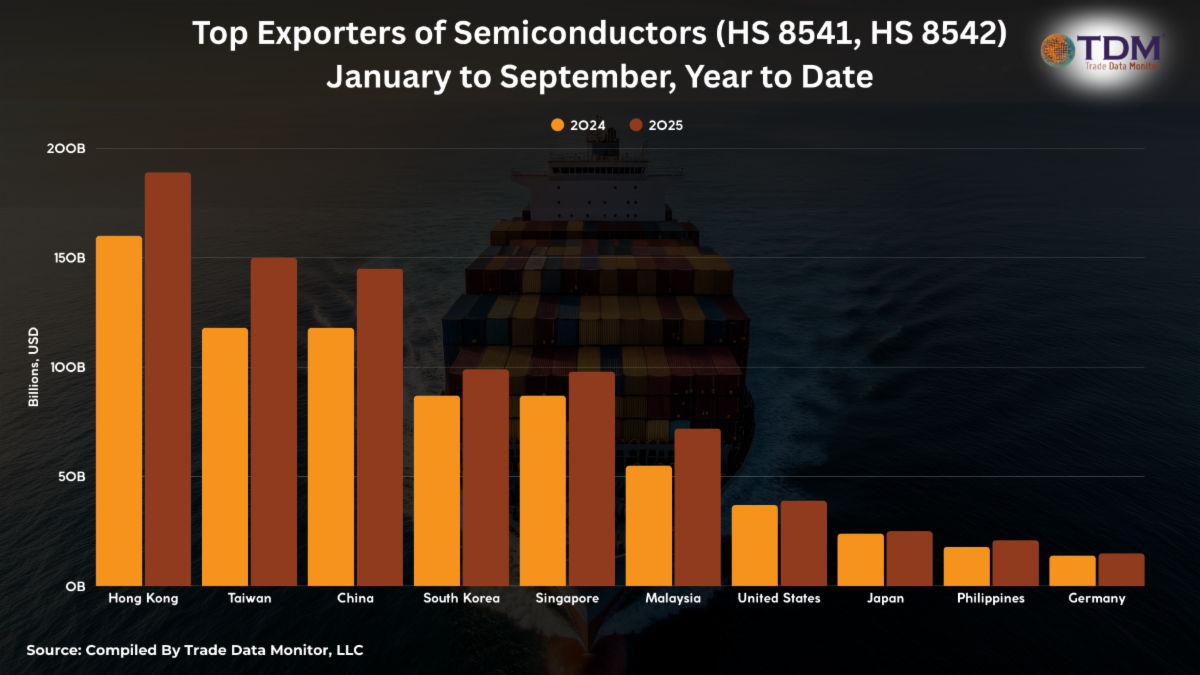
| 1. The Asian Chip MiracleThe chip market is expected to reach around $750 billion in 2026 and hit $2 trillion by the early 2030s. In its latest incarnation that trend is being led by Asia. Eight of the world’s top 10 exporters of chips, classified under HS8541 and HS8542 are Asian. Only the U.S. and Germany crack the top 10. |
 |
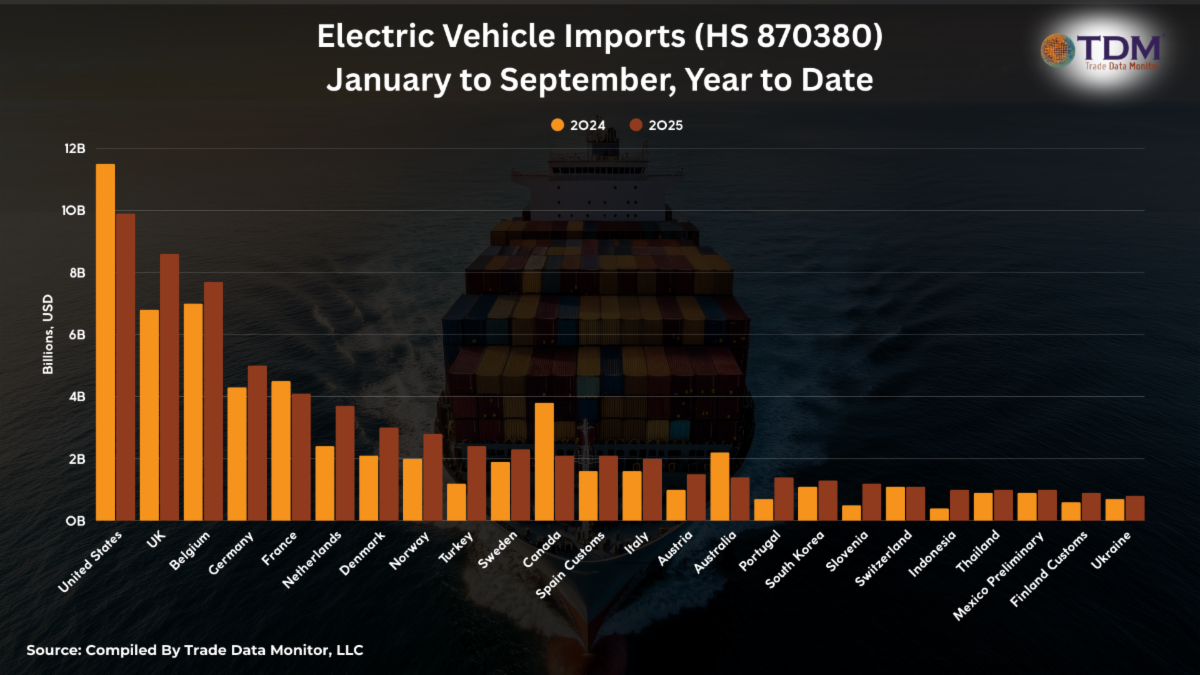
| Thanks in part to the chip industry, and parallel industries in batteries, engines and electronics, the electric vehicle industry is thriving. Slowly, the world’s road and filling stations are being rewired. In country after country, electric car imports have been increasing. One consequence is booming trade in the critical minerals, like cobalt, manganese and nickel, needed to build electric cars and batteries. We’ll explore that trade in our February newsletter. |
 |
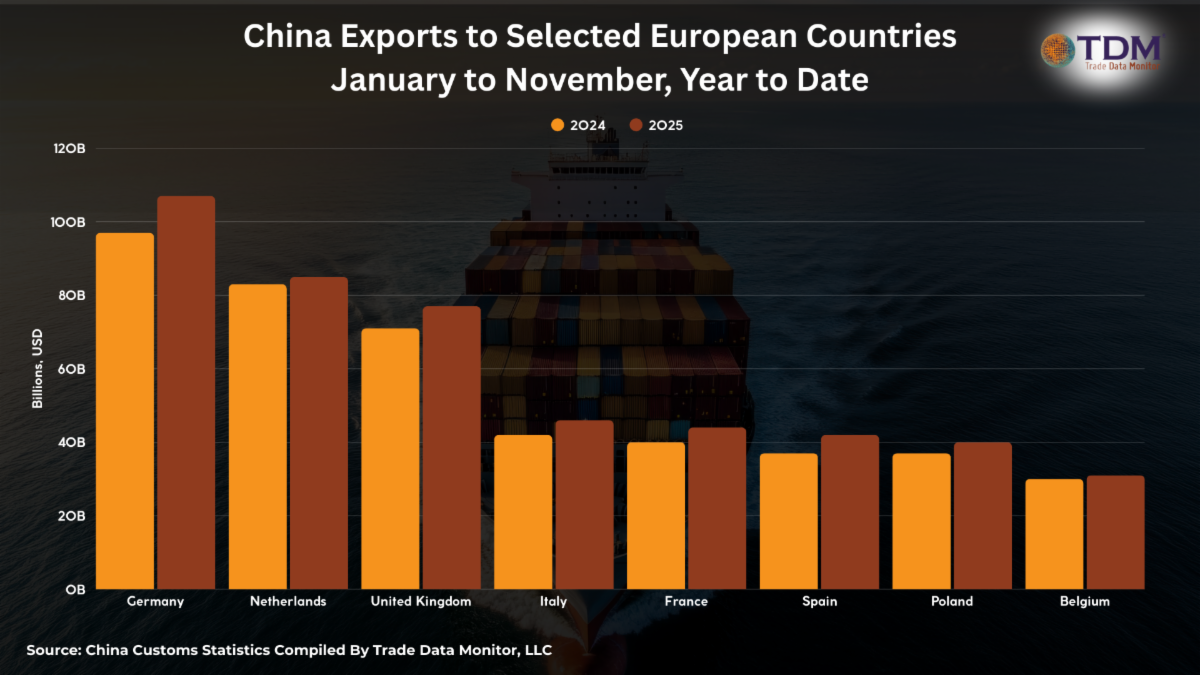
| 2. China Finding Markets in EuropeWith the U.S. throwing up roadblocks, Chinese exporters have been finding markets in Europe. That’s triggered a crisis for European domestic manufacturers, who are now having to compete with the China price Americans have turned down. |
 |
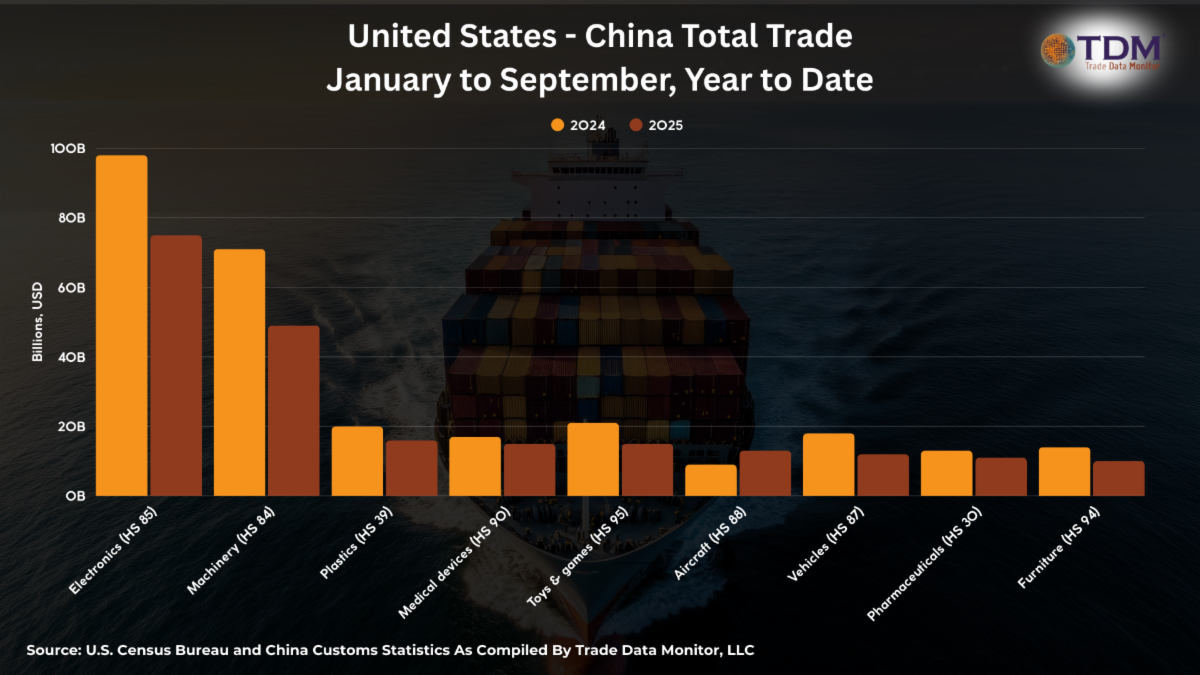
| 3. Where is U.S.-China Trade Headed?The future of the U.S.-China trade relationship seems uncertain at best. When we added up total trade between the two behemoths, the only sector has grew in 2025 was aircraft. The U.S. shipped $12.5 billion of aircraft and aircraft parts to China in the first nine months of 2025, up 45% from the same period in 2024. |
 |
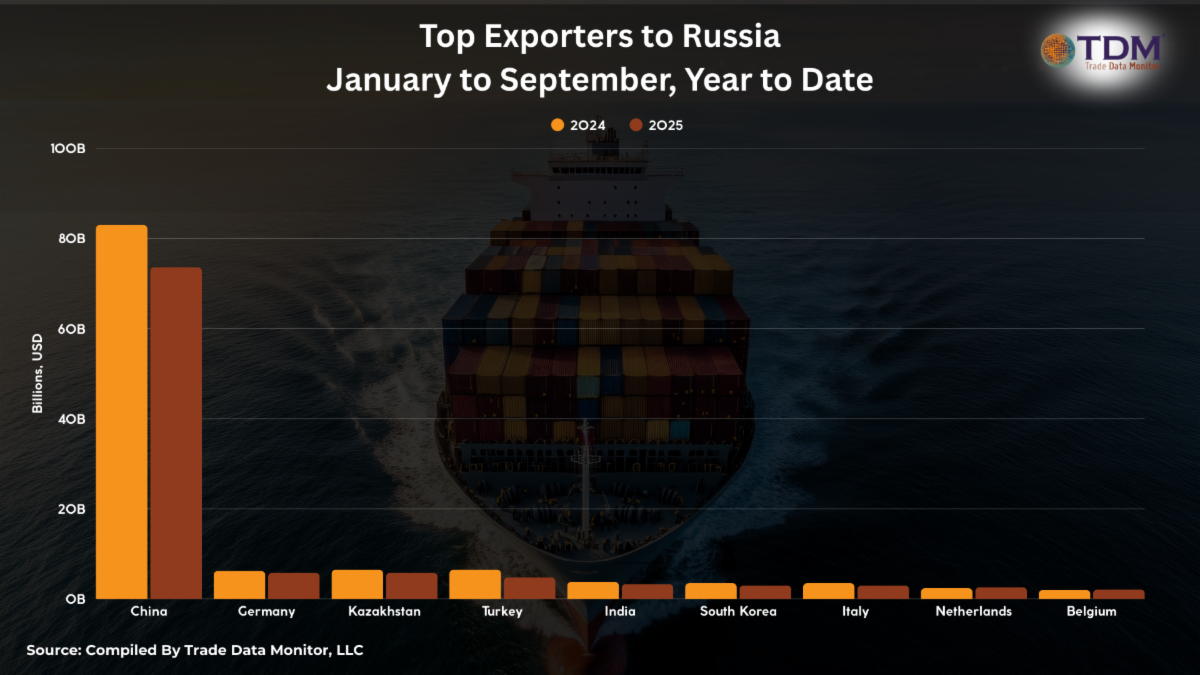
4. How Vietnam is Winning Global TradeAt TDM, we’ve been talking about Vietnam’s promise for a decade, so we’re not surprised to see its strong export numbers. The remarkable thing about Vietnam isn’t that it has become an export machine, it’s that its manufacturing capacity has increased across so broad a base. 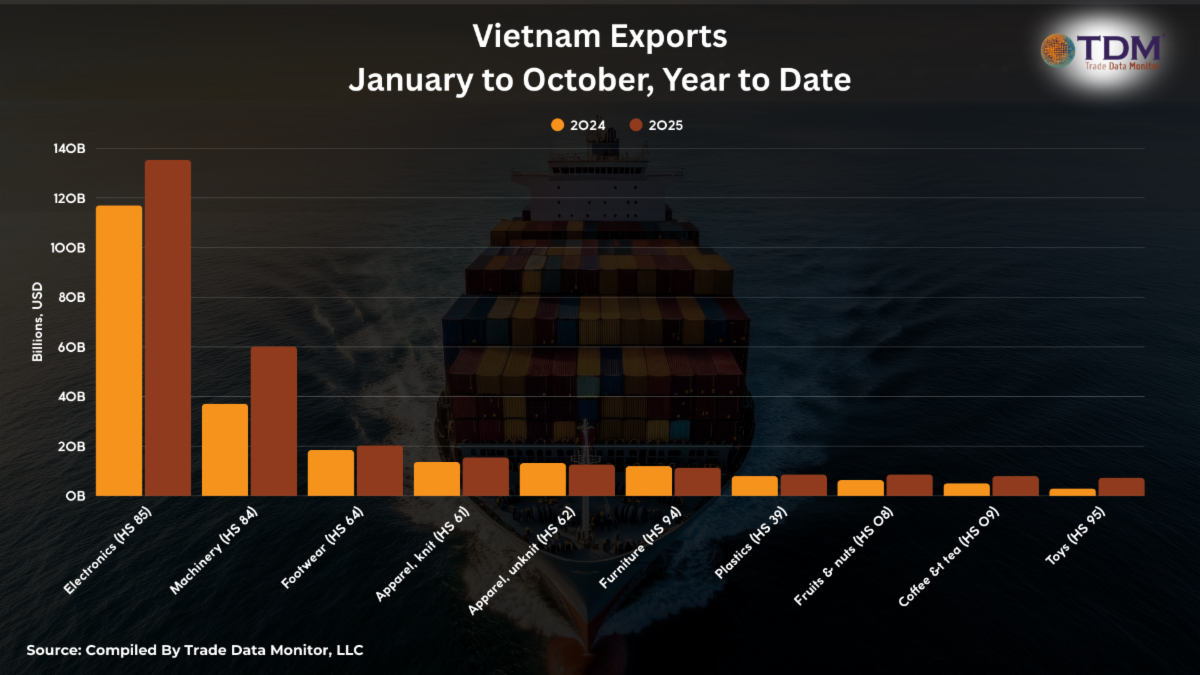 5. Russia’s Shrinking Import DemandRussia still isn’t publishing trade statistics, but thanks to the breadth of TDM’s database, we can look at which countries are shipping to Russia. Those exports to Russia are mostly shrinking, an indication of the battering Russia has been taking from the war. The IMF and other institutions predict Russian GDP growth of only around 1% in 2026. 5. Russia’s Shrinking Import DemandRussia still isn’t publishing trade statistics, but thanks to the breadth of TDM’s database, we can look at which countries are shipping to Russia. Those exports to Russia are mostly shrinking, an indication of the battering Russia has been taking from the war. The IMF and other institutions predict Russian GDP growth of only around 1% in 2026. |
 |
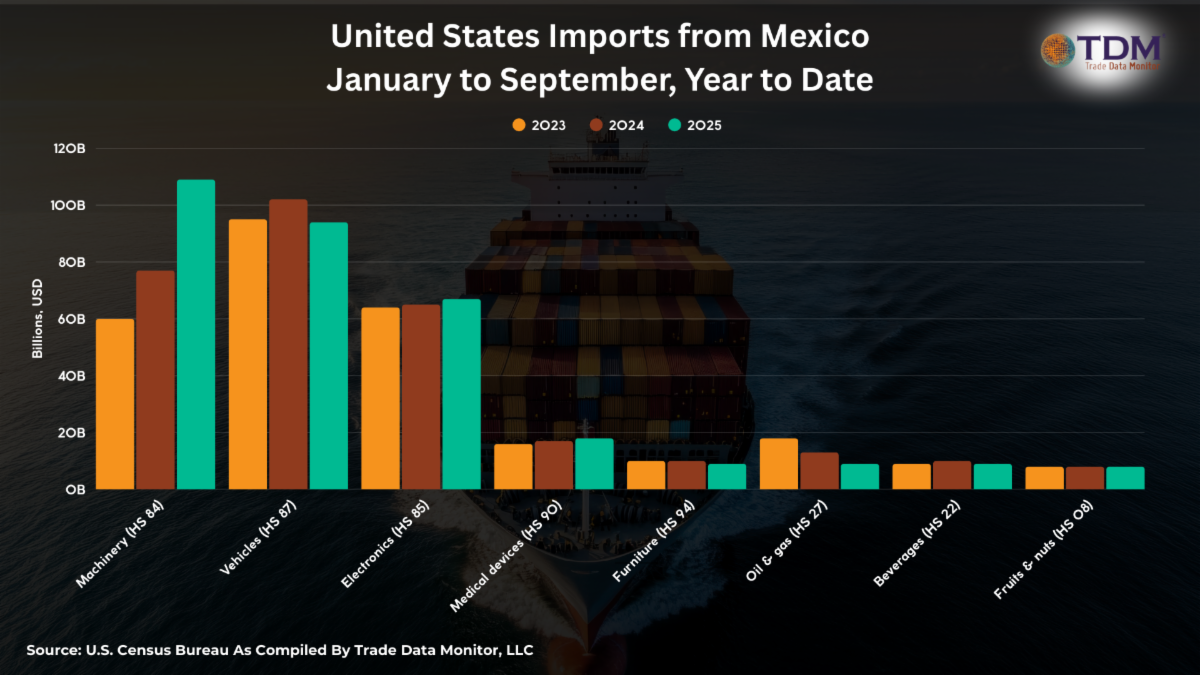
| 6. U.S. Imports from MexicoThe biggest beneficiary of the U.S.’s trade war with China has been Mexico. Although the two countries, and Canada, are now renegotiating the USMCA, businesses have had confidence they can manufacture in Mexico and ship north. Mexico has been suppressing data, but U.S. import statistics paint a picture. |
 |
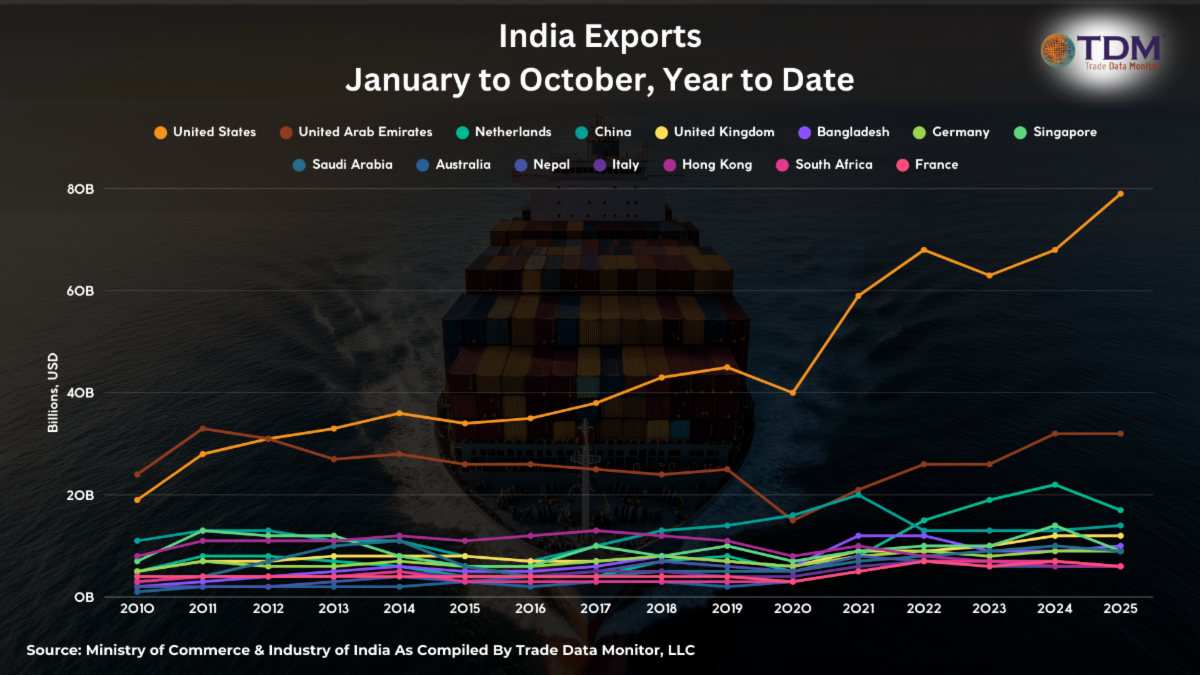
| 7. Indian ExportsNow with the world’s biggest population, India has now overtaken Japan as the world’s fourth biggest economy, behind the U.S., China and Germany. Its top market: the U.S., followed by UAE and the Netherlands. |
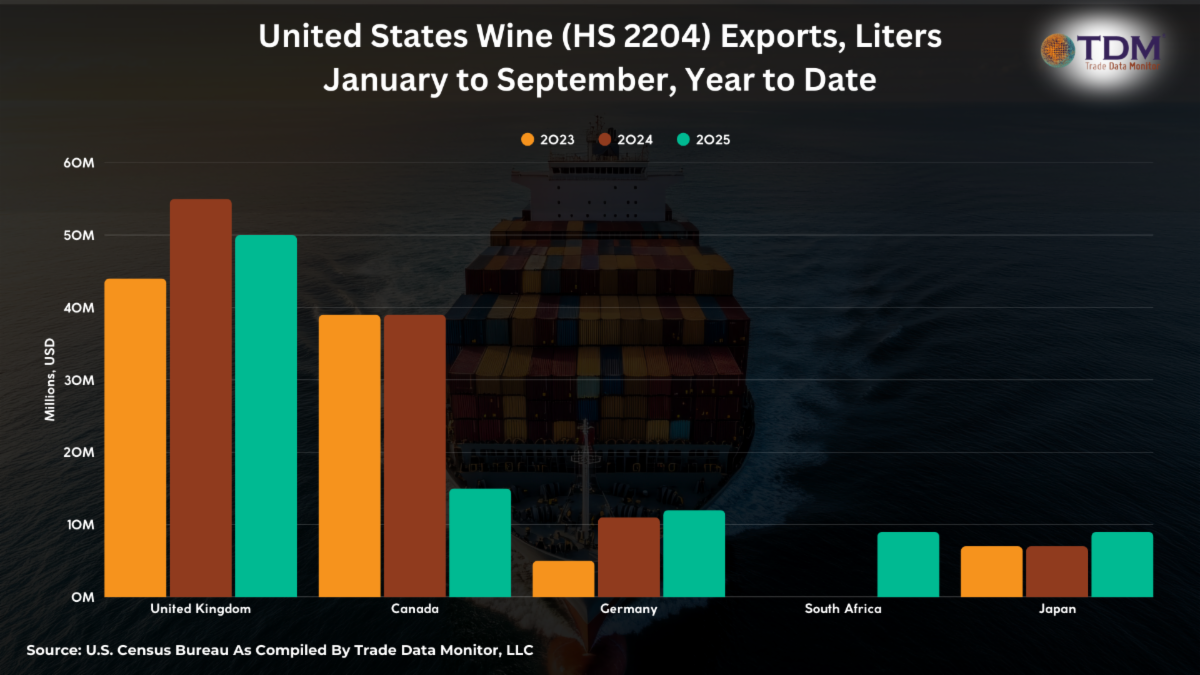
 8. Trade Case Study: EgyptTrade coverage focuses on the big countries, but we’ve been studying smaller players, and one interesting case study is Egypt. It’s been boosting apparel exports, a sign of a country’s increasing prosperity and competitiveness on export markets. In 2025, Egypt clocked the biggest increase in apparel exports, shipping out $2.6 billion in the first nine months of 2025, 30.7% more than the year before. The second highest increase was registered by Cambodia at 16.9%, and no other country improved by double digits. 8. Trade Case Study: EgyptTrade coverage focuses on the big countries, but we’ve been studying smaller players, and one interesting case study is Egypt. It’s been boosting apparel exports, a sign of a country’s increasing prosperity and competitiveness on export markets. In 2025, Egypt clocked the biggest increase in apparel exports, shipping out $2.6 billion in the first nine months of 2025, 30.7% more than the year before. The second highest increase was registered by Cambodia at 16.9%, and no other country improved by double digits. 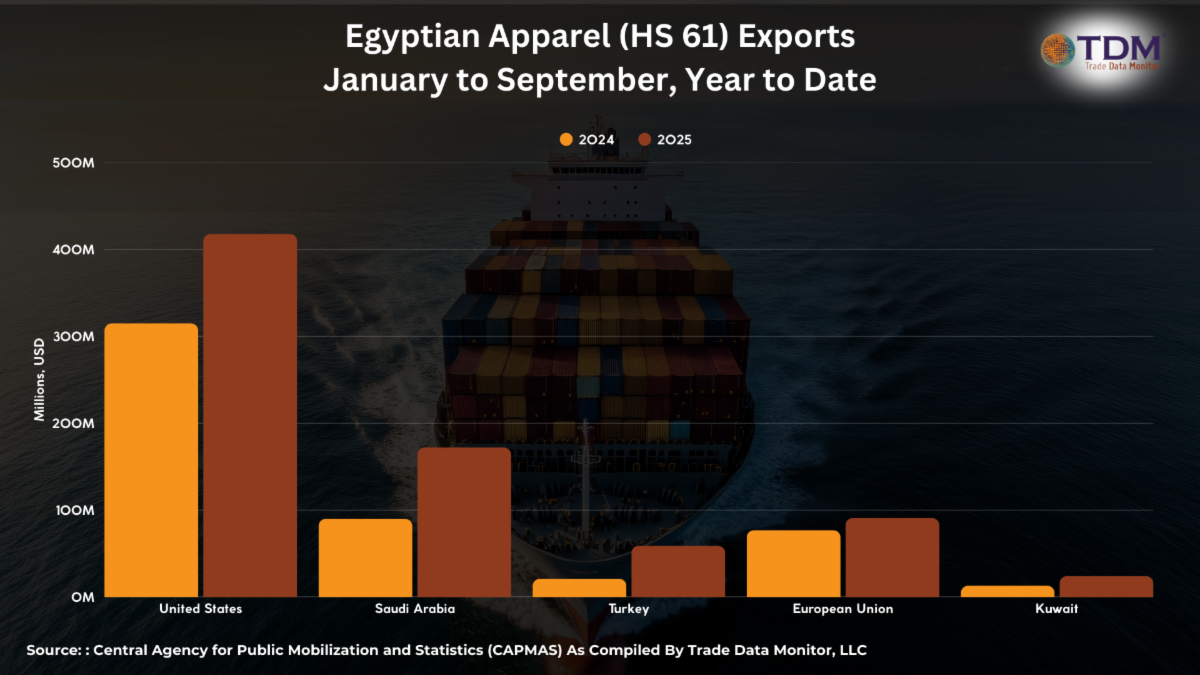 9. What States’ Ports and Economies Are Thriving MostAmerica is a huge continental economy with dozens of distinct economic regions and sea- and airports. We sorted every state by increase year-on-year in exports from the place it’s leaving the U.S., over the first nine months of 2025. Texas and California are still the biggest exporters overall, but New York leads the race in year-on, because of its trade in physical gold. Arizona ranks second because of its electronics trade with Mexico. Third is Indiana, thanks to its exports of hormones to Italy. 9. What States’ Ports and Economies Are Thriving MostAmerica is a huge continental economy with dozens of distinct economic regions and sea- and airports. We sorted every state by increase year-on-year in exports from the place it’s leaving the U.S., over the first nine months of 2025. Texas and California are still the biggest exporters overall, but New York leads the race in year-on, because of its trade in physical gold. Arizona ranks second because of its electronics trade with Mexico. Third is Indiana, thanks to its exports of hormones to Italy. 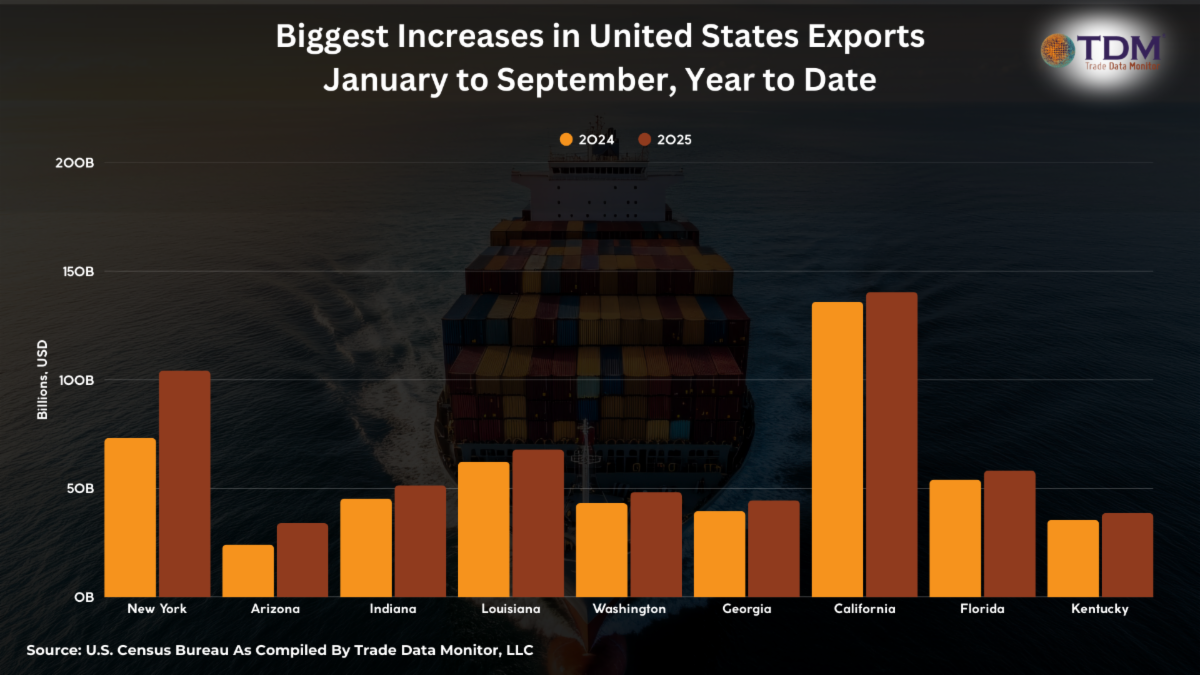 10. U.S. Wine ExportsA retaliatory tariff and a “Buy Canadian” movement have dented U.S. wine exports to its northern neighbor. Instead, U.S. producers are finding replacement markets in Germany, South Africa and Japan. 10. U.S. Wine ExportsA retaliatory tariff and a “Buy Canadian” movement have dented U.S. wine exports to its northern neighbor. Instead, U.S. producers are finding replacement markets in Germany, South Africa and Japan. |
 |
| 5 News Stories To Understand This Moment in Global Trade 📰 |
| WSJ: A Shrimper, a Carmaker, a Lawyer: How the World Tackled Trump’s Trade War: A fascinating mini-survey of how businesses around the world are being impacted by tariffs.Euronews: In 2025, global trade cracked as Europe hurt by US tariffs and new China shock: An important perspective, from Europe, on how trade flows have been rerouted toward the Old World. Global Trade: U.S. Tariffs to Cost Container Carriers $.2 billion by 2026, Alphaliner Warns: The U.S. isn’t just imposing tariffs on goods, it’s putting duties on ships. AP: Trump launched global tariff wars in 2025. Here’s a recap of his trade actions this year: A useful recap of U.S. trade duties in 2025. BBC: Peru’s ‘fast and furious’ blueberry boom: An optimistic story about global trade, chronicling how Peru has become the world’s biggest blueberry exporter. |
| What We’re Reading 📚 |
 With tariffs still beating down optimism over global trade, it’s easy to get dragged down by the political story of modern commerce. What’s lost is the triumph of human ingenuity represented by the global logistics industry figuring out how to move goods from any place in the world to any other place. My former Wall Street Journalcolleague Christopher Mims tells that story in his 2021 book Arriving Today: From Factory to Front Door—Why Everything Has Changed About How and What We Buy. In an illustrative anecdote, Mims tells the story of a USB charger. After leaving a factory in Vietnam, Mims recounts, the charger “has traveled more than 14,000 miles, across 12 times zones, by truck, barge, crane, container ship, crane, and truck again, all before it trundled down a few hundred yards of conveyor, flitted about on the back of a robot, and was ferried again on, all told, miles more conveyor and at least two more trucks, before being hand-carried to someone’s front door.” With tariffs still beating down optimism over global trade, it’s easy to get dragged down by the political story of modern commerce. What’s lost is the triumph of human ingenuity represented by the global logistics industry figuring out how to move goods from any place in the world to any other place. My former Wall Street Journalcolleague Christopher Mims tells that story in his 2021 book Arriving Today: From Factory to Front Door—Why Everything Has Changed About How and What We Buy. In an illustrative anecdote, Mims tells the story of a USB charger. After leaving a factory in Vietnam, Mims recounts, the charger “has traveled more than 14,000 miles, across 12 times zones, by truck, barge, crane, container ship, crane, and truck again, all before it trundled down a few hundred yards of conveyor, flitted about on the back of a robot, and was ferried again on, all told, miles more conveyor and at least two more trucks, before being hand-carried to someone’s front door.” |